
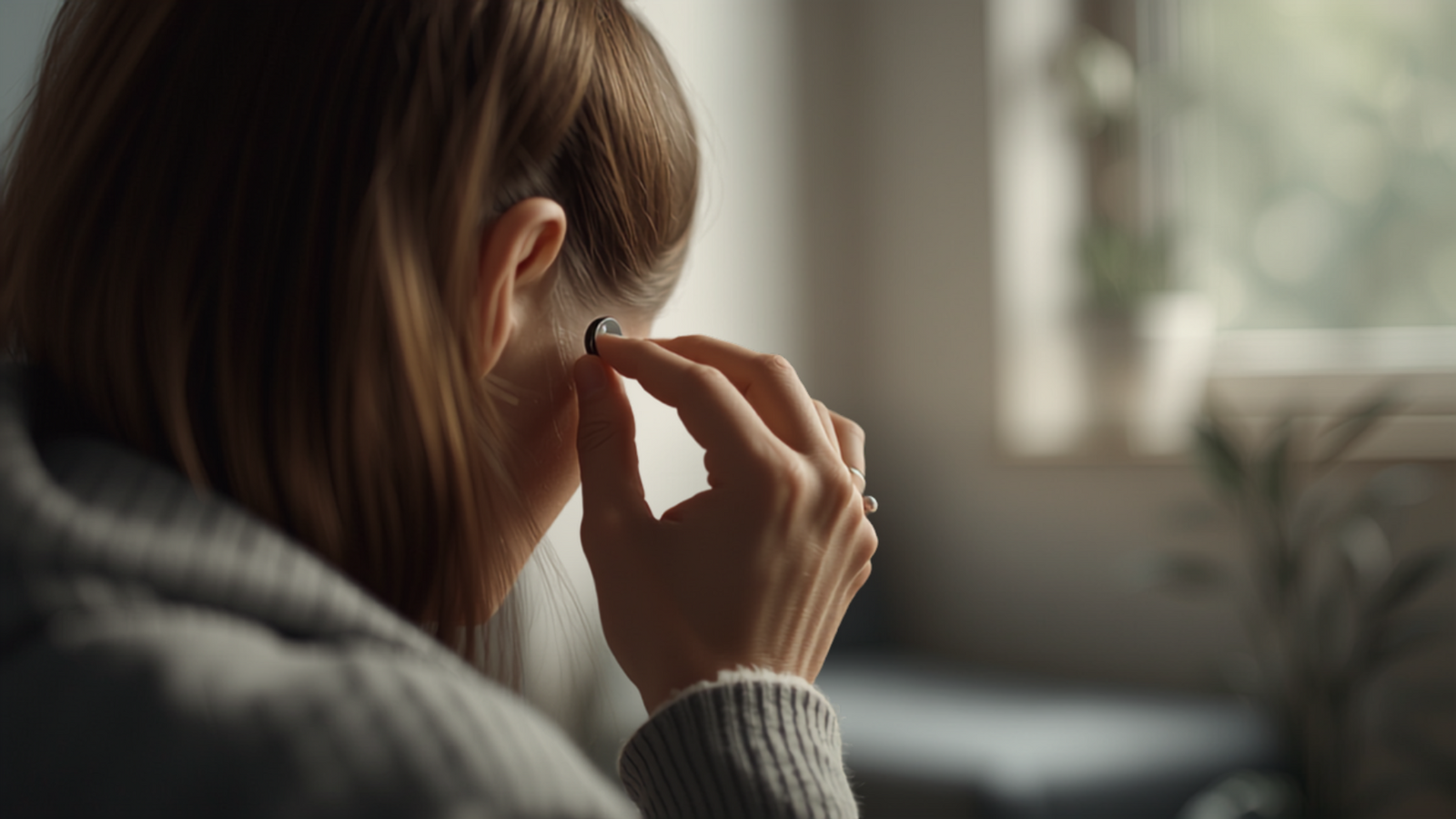
The Audiogram and Documentation of the Adaptation: When Follow-Up is the Treatment Itself
A hearing aid is not adjusted the day it is delivered. It is adjusted when the patient actually hears better – and your documentation is the path to that.
You know the situation: A patient comes back for a follow-up a few weeks after fitting. He finds sounds sharp and turns off his hearing aid in the cafeteria. To adjust correctly, you need to know what you did last time – which frequencies you reduced, what gain curve you chose, what he said about the sound last time. All of this is in the patient's record, or it isn't. And if it isn't there, you're partially starting over.
As an audiographer, you are authorized healthcare professional and the only professional group with specialized expertise in the actual fitting of hearing aids. But much of the value in your work doesn't lie in a single consultation – it lies in the connection between them. And that connection is carried by what you write down.
Adaptation is a process, not a moment
The Norwegian Directorate of Health's investigation of services for the hearing impaired is clear that today's hearing care includes much more than fitting hearing aids and assigning technical aids. Investigation, adaptation, guidance, and systematic follow-up are connected in a value chain, and good patient compliance depends on this chain holding.
For you, this means that each consultation builds upon the previous one. The audiogram, speech audiometry, hearing aid selection, real-ear measurements, settings, the user's own feedback on the soundscape – these are not loose notes, but a process that you yourself should be able to read in three months, by a colleague who takes over, or by the ENT doctor if something arises that needs further investigation. An adjustment that is not documented is difficult to fine-tune precisely the next time.
The nuances disappear in the time lag
The problem is well-known to most clinicians: you remember the conclusion, but the concrete observations fade. You know the patient was dissatisfied with the sound on the phone, but was it the treble or the compression he reacted to? Did he say «metallic» or «too loud»? Such details are exactly what you need for the next adjustment – and they are also the first things to disappear when the note is written hours after the patient has left.
The journal must, according to the Health Personnel Act, contain relevant and necessary information, and be easy for other qualified healthcare professionals to understand. For an audiologist, this is a high threshold: the note must capture both the technical settings and the patient's subjective experience, and it must do so precisely enough that follow-up actually makes sense. As for speech therapist and other smaller professional groups, digital tools are rarely built around your specific way of working – audiologists are among the professions that are easily forgotten when The digitalization of healthcare is being discussed.
This is how Medivox can be part of the solution
Medivox listens to the consultation and delivers a structured draft of the journal note. In practice, this means you can talk through what you are doing – «attenuating 3 to 4 kilohertz, patient experiences telephone sound as sharp, trying reduced compression» – and get it back as a neat note instead of having to reconstruct it afterward. The tool runs in the browser and requires no heavy hardware, so it fits in both the audiology clinic and private practice.
Because you build your own templates, the structure can mirror an audiological workflow: medical history and hearing history, audiometric findings, device selection, settings, user feedback, and follow-up plan. This makes the note easier to use for the next adjustment – and easier to hand over to a colleague. Privacy is maintained: personal data is pseudonymized before the data is processed further – we have explained how pseudonymization works in its own post – and all data processing happens in Norwegian data centers. And the responsibility is yours all the way: You own the record and make the final assessment. Medivox writes the draft; the audiological assessment, settings, and follow-up plan are yours.
A small group of gays with long follow-up
Audiologists often work with the same patients over many years. Hearing changes, hearing aids are replaced, and life circumstances affect what the patient needs to hear. Precisely for this reason, your patient record is a working tool and not just a requirement: it is the memory that allows follow-up care to improve each time, rather than starting over from scratch.
Perhaps that's where the real gain lies. When the note writes itself in drafts, there's more time for what actually requires your ears and fingertips – the fine-tuning that makes the patient keep the device on, even in the cafeteria. What would you use that time for?
Frequently Asked Questions
Does speech-to-text work for audiology consultations?
Yes. You can build your own templates with points such as hearing history, audiometric findings, settings, user feedback, and follow-up plan, so that the draft follows your professional structure.
Can I dictate the technical settings right after a customization?
Yes. Medivox runs in your browser, so you can talk through settings and observations while they are fresh, instead of writing everything down later.
Does it help with the follow-up appointments?
A clearly structured note makes it easier to see what you did last – which frequencies and settings you chose – so that the adjustment at the next appointment becomes more precise.
Are the patient details safe?
Personal data is pseudonymized before it is processed further, and all data processing takes place at Norwegian data centers.
Who is responsible for the content of the medical record?
You. Medivox creates a draft, but you review, correct, and approve it. You own the record and make the final decision.
Use Medivox for free – Get started completely free
Curious about how speech-to-text can fit into a busy audiology clinic or practice? Contact us – We'll show you how Medivox works with your templates and your workflow.
Sources:
- Norwegian Directorate of Health § 48. Authorization (Health Personnel Act with Commentary)
- The Norwegian Directorate of Health (2025): Investigation of services for the hearing impaired – alternative models for investigation and treatment of hearing loss
- Norwegian Directorate of Health § 40. Requirements for the content of the patient record, etc. (Health Personnel Act with comments)


 English
  Norwegian